Today's blog post topic is different styles of piano:
Many modern styles of piano playing are based around the blues, but other modern styles often tend to be a very emotional, popular style. What classifies a piano style as emotional-popular is often an ever repeating melody or theme, and many chords. Watch the video below to get a general idea of what this style is like:
Another popular style of piano playing is ragtime, which is not only a style of playing, but a genre of music itself. This style of piano playing is often very... "jumpy," so to speak, as it moves around a lot, and is very playful. It is a very fun and bubbly style of playing. Watch the video below to get a general idea of what this style is like:
And then, of course, is the classical piano style, which is the more traditional, older style that is used for practically all classical music. I almost always use the classical piano style, although, if you refer back to one of my older posts, the C'etait Salement Romantique piece I learned to play part of is actually emotional-popular style. So watch both my classical style videos that I posted a few weeks ago, as well as the song I learned! Thanks!
Tuesday, May 3, 2011

Thursday, April 28, 2011
Nocturne (Op. 54 No. 4, in C)
Enjoy this video of me playing "Notturno," or Nocturne, by Edvard Grieg:
Child Prodigies
Recently, I've been looking up a lot of the pieces I play or have played on YouTube, and always discover some little five or six-year-old music genius who has already perfectly mastered it. It always gets me down in the dumps, because, obviously, I know that a little kid can play the same pieces I can. But sometimes, though, I have the reassurance from some YouTuber's comment that, actually, the little kid just plays the piece fast, and doesn't actually put any dynamics (that's loud and soft, etc. for all those people who don't know music very well) or emotion into the pieces. So that makes me feel a little bit better.
But, in any case, this brings up the interesting topic of child prodigies. After doing some research, I've found that basically anyone can force a little kid to play well and not stop until they play perfectly, but what actually defines a child prodigy is that they themselves have the ability to play greatly, and work hard enough that they can do well in the music world. This could mean that, for instance, maybe they can play with the same level of dynamics and emotions and near perfection of a music expert, or simply that they can compose some really wonderful music. And I found a video with several comments from people who are very...passionate about the subject of child prodigies. So pay special attention to the comments on the video, but before you do, take a look at the definition of the word "prodigy," then go to the link below and compare it to the comments the people posted on the video:
prod·i·gy
–noun, plural -gies.
But, in any case, this brings up the interesting topic of child prodigies. After doing some research, I've found that basically anyone can force a little kid to play well and not stop until they play perfectly, but what actually defines a child prodigy is that they themselves have the ability to play greatly, and work hard enough that they can do well in the music world. This could mean that, for instance, maybe they can play with the same level of dynamics and emotions and near perfection of a music expert, or simply that they can compose some really wonderful music. And I found a video with several comments from people who are very...passionate about the subject of child prodigies. So pay special attention to the comments on the video, but before you do, take a look at the definition of the word "prodigy," then go to the link below and compare it to the comments the people posted on the video:
prod·i·gy
–noun, plural -gies.
1.
a person, especially a child or young person, havingextraordinary talent or ability: a musical prodigy.
2.
a marvelous example (usually followed by of ).
Tuesday, April 26, 2011
Cadence Chords - What is a common tone?
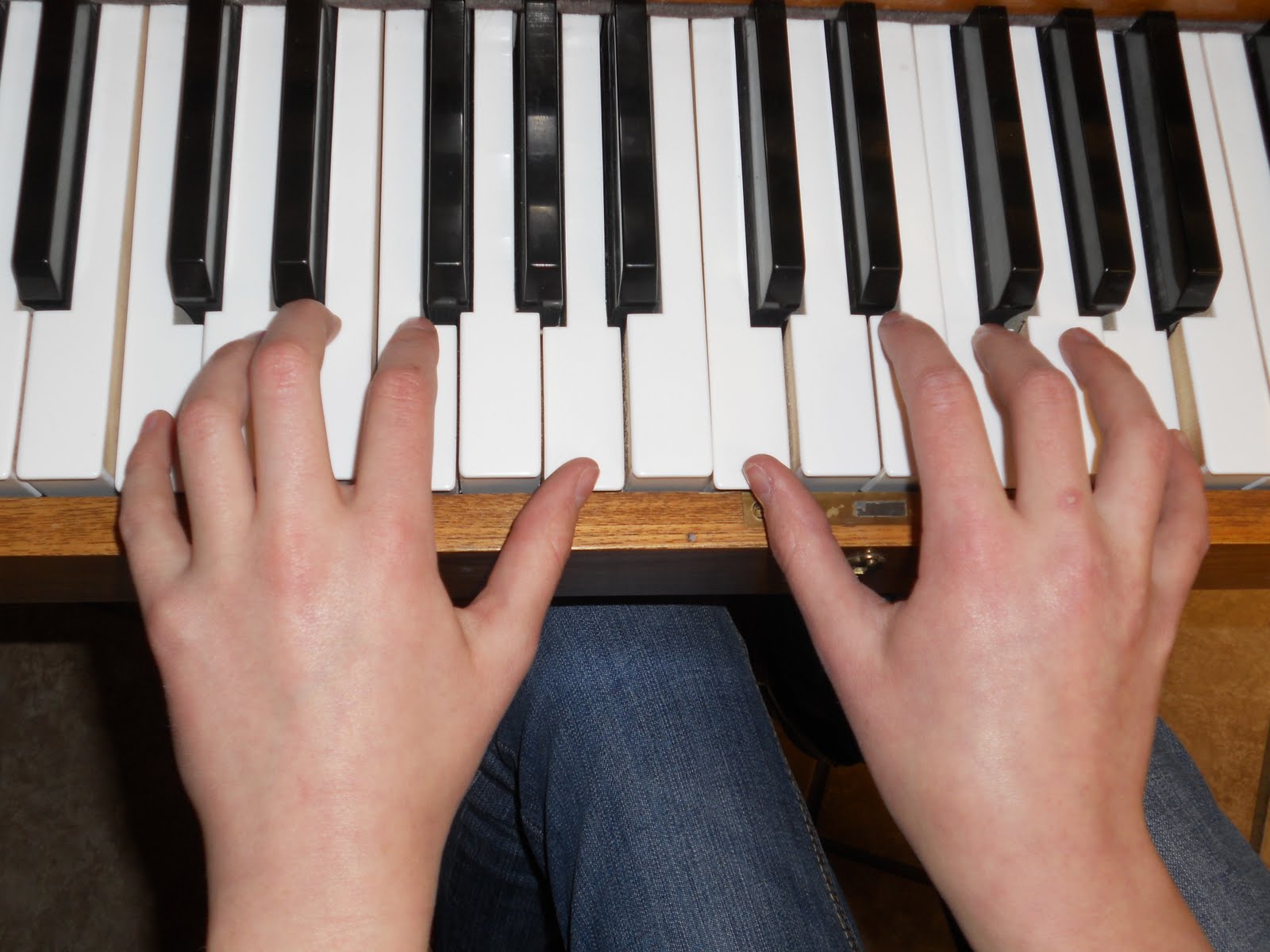
A common tone is a pitch class that is a member of or related to a musical scale. It sounds complicated, but isn't really. Cadence chords tie into the general idea of a common tone, as they are chords that consist of a changed version of another chord that shares the original chord's common tone. Here are some pictures to help you get an idea of what cadence chords look like:
The original chord of C Major, consisting of C, E, and G, looks like this:

Its first cadence chord, sometimes called the antepenult (even though I've never heard of this name before), consists of B, D, and G, and shares the C Major chord's common tone of G:

Its last cadence chord, consisting of C, F, and A, and sometimes called the final, looks like this, and sharing the C Major chord's common tone of C (I think...):
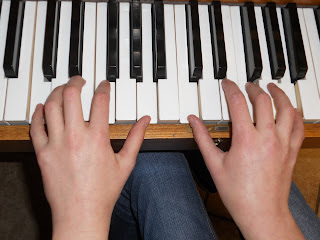
The original chord of C Major, consisting of C, E, and G, looks like this:

Its first cadence chord, sometimes called the antepenult (even though I've never heard of this name before), consists of B, D, and G, and shares the C Major chord's common tone of G:

Its last cadence chord, consisting of C, F, and A, and sometimes called the final, looks like this, and sharing the C Major chord's common tone of C (I think...):
Thanks to Fiona for taking the great pictures!
Thursday, April 21, 2011
Some More Cool Piano Stuff
Just thought I'd make this a little blog post with tons of awesome, piano-related stuff!
Click the link below for a virtual keyboard:
http://www.bgfl.org/bgfl/custom/resources_ftp/client_ftp/ks2/music/piano/
Watch the video below of two people playing Scott Joplin's "The Entertainer" on a GIANT PIANO!
Watch the video below of a few people playing a song on a stair-piano...it's hard to explain unless you watch it:
Click the link below for a virtual keyboard:
http://www.bgfl.org/bgfl/custom/resources_ftp/client_ftp/ks2/music/piano/
Watch the video below of two people playing Scott Joplin's "The Entertainer" on a GIANT PIANO!
Watch the video below of a few people playing a song on a stair-piano...it's hard to explain unless you watch it:
Tuesday, April 19, 2011
New Song-Learning Followup Take 2
This time, below is a quick video of me actually playing the new piece I learned a part of. I learned more of it, but forgot to record the other part, and didn't have time to post it as well. But here is the little part I learned (and it repeats itself many times in the piece, although I only played a bit of it in this video):
Subscribe to:
Posts (Atom)